
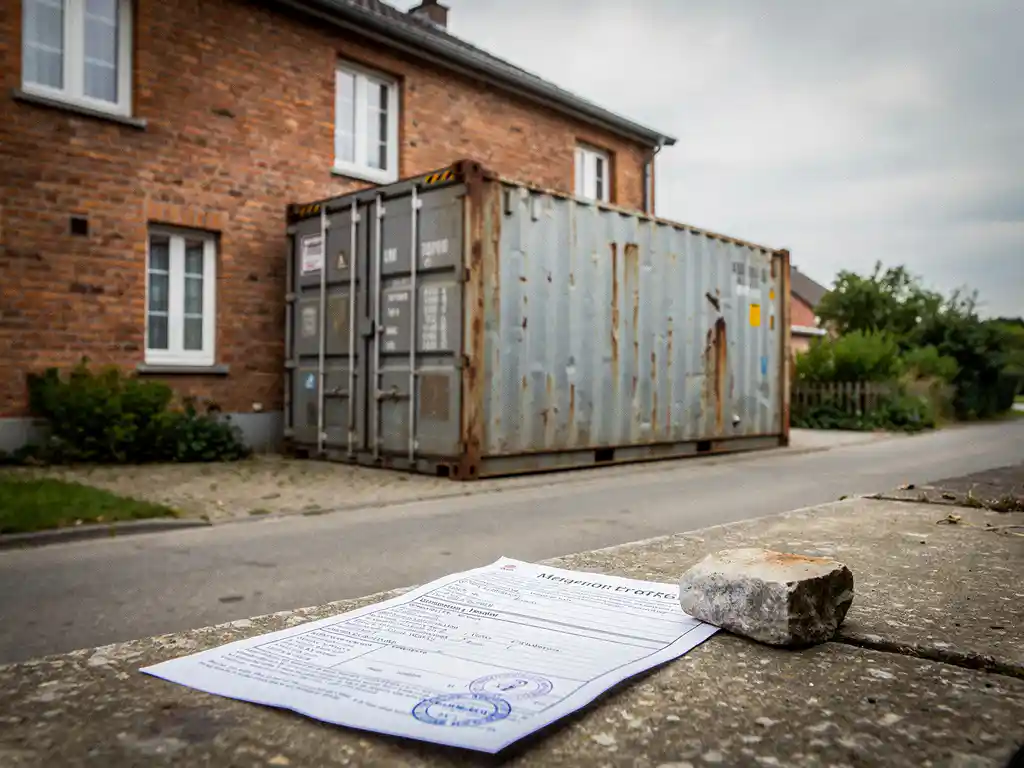
Als ondernemer wil je snel kunnen handelen. Of je nu extra opslagruimte nodig hebt op je bedrijfsterrein, goederen wil verschepen via zeevracht, of een container tijdelijk wil plaatsen tijdens een project, de vraag is steeds dezelfde: mag dat zomaar? De regels rond zeecontainers zijn niet altijd even duidelijk, en een verkeerde inschatting kan je duur komen te staan. In dit artikel geven we je een helder overzicht, van wat een zeecontainer precies is tot hoe internationale douaneregels meespelen bij containertransport.
Wat is een zeecontainer en waarvoor wordt hij gebruikt?
Een zeecontainer is een gestandaardiseerde, herbruikbare stalen box die ontworpen is voor het transport en de opslag van goederen. Hij is verkrijgbaar in vaste afmetingen, meestal 20 of 40 voet lang, en is gebouwd om overgedragen te worden tussen schepen, vrachtwagens en treinen zonder de lading binnenin te lossen. Dit maakt hem de ruggengraat van het moderne internationale transport en containertransport.
Naast transport dienen zeecontainers voor een breed scala aan praktische doeleinden voor bedrijven. Veel kmo-eigenaars gebruiken ze als tijdelijke opslagruimte op locatie, pop-up werkruimtes, of zelfs als permanente structuren na aanpassing. In de context van internationale zeevracht beschermen containers goederen tegen weer, diefstal en schade tijdens lange oceaanreizen. Hun gestandaardiseerde afmetingen zorgen ervoor dat ze efficiënt gestapeld kunnen worden in havens en terminals, waardoor de logistieke kosten beheersbaar blijven. Of je nu industriële apparatuur, consumptiegoederen of niet-standaard lading verzendt, de container is de meest veelzijdige eenheid in de wereldhandel.
Heb je een vergunning nodig om een zeecontainer te plaatsen?
Of je een vergunning nodig hebt om een zeecontainer te plaatsen, hangt af van hoe je hem wilt gebruiken, waar je hem plaatst en voor hoe lang. In België vereist het plaatsen van een container op privégrond niet automatisch een bouwvergunning, maar lokale gemeentelijke regels en bestemmingsplannen zijn bijna altijd van toepassing. Er is geen eenduidig nationaal antwoord, dus het is essentieel om bij je lokale overheid te informeren voordat je er een plaatst.
De belangrijkste factoren die bepalen of een vergunning vereist is, zijn het beoogde gebruik, de duur van de plaatsing en de locatie. Een container die tijdelijk wordt geplaatst voor een bouwproject wordt anders behandeld dan een container die wordt gebruikt als permanente opslagfaciliteit of kantoorruimte. Gemeenten in België hebben elk hun eigen stedenbouwkundige voorschriften, en sommige vereisen een vergunning zelfs voor kortetermijnplaatsingen op privéterrein. Dit stap overslaan kan leiden tot boetes of gedwongen verwijdering, wat onnodige verstoringen van je activiteiten met zich meebrengt.
Wanneer is een zeecontainer vergunningsvrij?
Een zeecontainer wordt in België over het algemeen als vergunningsvrij beschouwd wanneer hij tijdelijk wordt geplaatst, uitsluitend voor opslag wordt gebruikt en het land of de omliggende structuur niet wijzigt. De meeste gemeenten staan kortetermijnplaatsing toe zonder vergunning als de container niet is aangesloten op nutsvoorzieningen, niet toegankelijk is voor het publiek en binnen een bepaalde periode wordt verwijderd, vaak tussen de 30 en 180 dagen afhankelijk van de lokale regels.
Veelvoorkomende situaties waarbij een container doorgaans vergunningsvrij is, zijn:
- Tijdelijke opslag tijdens een bouw- of renovatieproject op privéterrein
- Kortetermijnplaatsing voor seizoensgebonden voorraadoverschot
- Containers die uitsluitend voor transport worden gebruikt en niet op locatie achterblijven
- Agrarisch gebruik in landelijke zones, onderhevig aan lokale bestemmingsplanregels
Zelfs in deze gevallen is het altijd verstandig om je gemeente vooraf op de hoogte te stellen. Wat als “tijdelijk” wordt beschouwd, verschilt per regio, en aannames kunnen kostbaar zijn. Bij twijfel kost een snelle check bij je lokale planningsdienst veel minder tijd dan het achteraf oplossen van een nalevingsprobleem.
Wat gebeurt er als je een container plaatst zonder de juiste vergunning?
Het plaatsen van een zeecontainer zonder de vereiste vergunning kan leiden tot administratieve boetes, een formeel bevel tot verwijdering van de container en in sommige gevallen juridische procedures op grond van de Belgische stedenbouwwetgeving. Gemeenten hebben de bevoegdheid om naleving af te dwingen, en overtredingen worden serieus genomen, vooral wanneer containers worden geplaatst in woonzones of op openbaar terrein.
Voor kmo-eigenaars gaan de praktische gevolgen verder dan de boete zelf. Een gedwongen verwijderingsbevel kan je activiteiten op het slechtst mogelijke moment verstoren, met name als de container voorraad of apparatuur bevat die cruciaal is voor je bedrijf. In sommige gevallen kun je ook aansprakelijk worden gesteld voor schade aan het terrein of de infrastructuur veroorzaakt door onjuiste plaatsing. De administratieve last van het oplossen van een overtreding, inclusief correspondentie met lokale autoriteiten en mogelijke juridische kosten, loopt snel op. Vanaf het begin correct handelen is altijd de kostenefficiëntere aanpak.
Hoe beïnvloeden douane- en invoerregels zeecontainers?
Wanneer een zeecontainer een internationale grens oversteekt, komt hij terecht in de wereld van de douaneregelgeving. In de context van internationale zeevracht moet elke container worden aangegeven bij de douaneautoriteiten, en de goederen binnenin moeten vergezeld gaan van de juiste documentatie. In België is Antwerpen een van de grootste havenknooppunten van Europa, en containers die er doorheen gaan, zijn onderworpen aan zowel Belgische als EU-douaneregels.
Voor bedrijven die goederen importeren of exporteren, omvat het douaneproces verschillende lagen van coördinatie. Documentatie moet nauwkeurig en volledig zijn, inclusief commerciële facturen, paklijsten, cognossementen en in sommige gevallen oorsprongscertificaten of specifieke invoervergunningen. Fouten in deze documenten kunnen leiden tot vertragingen, inspecties of zelfs inbeslagname van goederen. Voor niet-standaard lading zoals kunst, antiek, koper of projectmateriaal kunnen aanvullende vergunningen of tijdelijke invoeraangiften vereist zijn.
Naast het papierwerk kunnen douaneautoriteiten containers fysiek inspecteren in de haven, wat tijd en kosten toevoegt aan de toeleveringsketen. Dagelijkse opvolging en proactieve communicatie met alle betrokken partijen, inclusief de rederij, de terminaloperator en de douaneagent, is wat lading op schema houdt. Deze coördinatie-uitdaging is een van de meest voorkomende hoofdpijnen voor kmo-eigenaars die voor het eerst internationale containerlogistiek navigeren.
Wie kan je helpen bij het navigeren van containerregelgeving en logistiek?
Een expediteur of douaneagent met praktijkervaring in zeevracht en Belgische douaneregelgeving is de juiste partner om je te helpen bij het navigeren van containerregels. Deze specialisten regelen de documentatie, coördineren met havenautoriteiten en zorgen ervoor dat je lading zonder onnodige vertragingen beweegt. Voor complexe zendingen of niet-standaard lading is samenwerken met een ervaren logistieke partner geen optie, maar een noodzaak.
Kmo-eigenaars profiteren in het bijzonder van samenwerking met een partner die zowel de regelgevingskant als de operationele realiteit van het runnen van een kleiner bedrijf begrijpt. Je hebt iemand nodig die de telefoon opneemt, met je meedenkt en problemen oplost voordat ze kostbare vertragingen worden. Of de uitdaging nu een ontbrekend document is, een onverwachte douane-inspectie, of het coördineren van levering via meerdere transportmodi, een deskundige partner aan je zijde maakt het verschil.
Hoe Boschmans Steinacher helpt met maritiem containertransport
Boschmans Steinacher is een familiebedrijf in de logistiek, gevestigd in Antwerpen, met meer dan 125 jaar ervaring in multimodaal transport en internationale zeevracht. Wij beheren de volledige export- en importketen, van ophaling en documentatie tot dagelijkse opvolging en eindlevering. Ons team coördineert tussen alle betrokken partijen, waaronder rederijen, terminaloperatoren, douaneautoriteiten en lokale inspecteurs, zodat je nooit meerdere contacten tegelijk hoeft na te jagen.
Wat ons onderscheidt voor kmo-eigenaars is onze allesomvattende aanpak gecombineerd met diepgaande expertise in niet-standaard lading. Wij behandelen niet alleen standaardcontainers, maar ook gespecialiseerde zendingen die extra zorg, aangepaste documentatie of specifieke routing vereisen. Ons uitgebreide partnernetwerk omvat wereldwijde maritieme knooppunten, waardoor we concurrerende en flexibele oplossingen kunnen bieden ongeacht de bestemming.
- Volledige douaneafhandeling en correcte documentatie van begin tot eind
- Dagelijkse coördinatie en opvolging doorheen de gehele toeleveringsketen
- Gespecialiseerde behandeling van niet-standaard en complexe lading
- Duurzame logistieke oplossingen in lijn met MVO-normen
Ben je een kmo-eigenaar op zoek naar een betrouwbare, no-nonsense partner voor je containerzendingen? Neem rechtstreeks contact op met Boschmans Steinacher en laat ons de logistieke complexiteit van je schouders nemen, zodat jij je kunt focussen op het runnen van je bedrijf.
Frequently Asked Questions
How do I know whether my municipality requires a permit for a temporary container placement?
The most reliable first step is to contact your local planning office (stedenbouwkundige dienst) directly and describe your intended use, location, and expected duration. Many Belgian municipalities have this information available online through their urban planning portal, but rules can differ significantly even between neighboring towns. When in doubt, ask in writing so you have a paper trail confirming what was communicated.
Can I place a sea container on public land or on the street in front of my business?
Placing a container on public land, including the public road or pavement in front of your premises, almost always requires explicit permission from the local authority and is subject to strict conditions. You will typically need to apply for a temporary occupation permit (vergunning tijdelijke inname openbaar domein), pay a usage fee, and comply with safety requirements such as signage and lighting. Unauthorized placement on public land carries a higher risk of immediate removal and fines compared to private land violations.
What documents do I need to prepare before shipping goods in a sea container internationally?
At a minimum, you will need a commercial invoice, a packing list, a bill of lading, and an export or import declaration filed with customs. Depending on the nature of your goods, you may also need certificates of origin, product-specific licenses, phytosanitary certificates, or dangerous goods declarations. Working with a customs broker from the start ensures your documentation package is complete and accurate, which is the single most effective way to avoid port delays or inspections.
What are the most common mistakes SME owners make when shipping via sea freight for the first time?
The most frequent mistakes include underestimating lead times for documentation, incorrectly classifying goods under customs tariff codes (HS codes), and failing to account for port handling fees or demurrage charges if a container is not collected on time. Many first-time shippers also overlook the importance of cargo insurance, assuming the shipping line’s liability covers the full value of their goods, which it typically does not. Partnering with an experienced freight forwarder before your first shipment can help you avoid all of these pitfalls.
How long can I keep a sea container on my private property before it is considered a permanent structure?
This threshold varies by municipality, but in Belgium a container is generally considered permanent once it has been in place for more than 30 to 180 days, depending on local zoning rules. Once classified as a permanent structure, it may be subject to building permit requirements under the Flemish, Walloon, or Brussels spatial planning codes. If your storage need extends beyond a few months, it is worth proactively consulting your local planning office or a logistics partner who can advise on compliant alternatives.
Is it possible to modify or convert a sea container, and does that affect the permit requirements?
Yes, containers can be modified for use as offices, workshops, or storage units with insulation, windows, and utility connections, but any modification that makes the container more permanently integrated into its surroundings will almost certainly trigger permit requirements. Adding electricity, plumbing, or a fixed foundation changes the legal classification from a movable object to a built structure in the eyes of most Belgian planning authorities. Always consult your municipality before starting any conversion project to understand exactly which permits apply.
What is demurrage, and how can I avoid unexpected demurrage charges on my container shipment?
Demurrage is a fee charged by the shipping line when a container is not returned to the terminal within the agreed free period, typically between 5 and 14 days after vessel arrival. These charges accumulate daily and can quickly exceed the original freight cost if customs clearance is delayed or if your warehouse is not ready to receive the goods. The best way to avoid them is to ensure all import documentation is prepared and submitted well before the vessel arrives, and to coordinate closely with your customs broker and transport provider so there are no gaps in the handover chain.
Related Articles
- Wat is het verschil tussen FCL en LCL voor bouwmaterialen transport?
- Hoe lang duurt machinerietransport van Antwerpen naar Azië?
- Wat zijn de kosten voor het transport van watertanks over zee?
- Hoe worden vaten beschermd tegen beschadiging tijdens zeevervoer?
- Welke expertise heeft een expediteur in project cargo transport?