
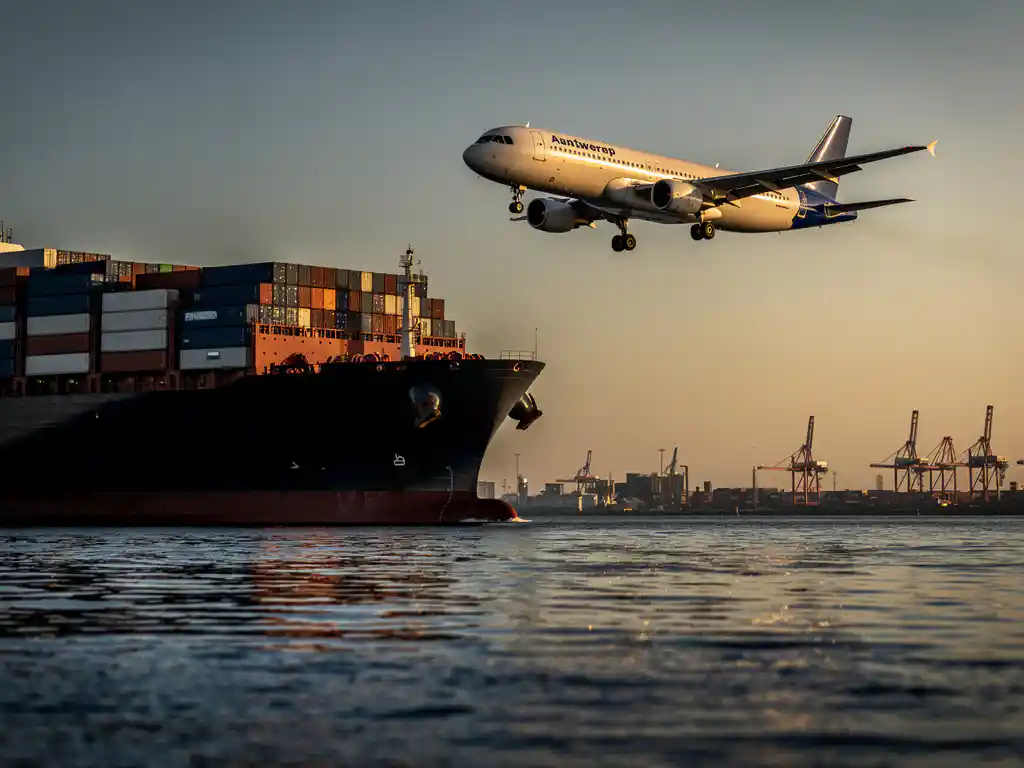
Wanneer u goederen over de grens moet verplaatsen, is een van de eerste beslissingen die u moet nemen het kiezen tussen zeevracht en luchtvracht. Beide transportmodi hebben hun plaats in de internationale logistiek, maar de verkeerde keuze kan u tijd, geld of beide kosten. Of u nu een volledige container met industriële goederen verscheept of een tijdgevoelige zending, inzicht in de afwegingen tussen deze twee opties helpt u slimmere beslissingen te nemen voor uw bedrijf.
Wat is het verschil tussen zeevracht en luchtvracht?
Zeevracht verplaatst lading aan boord van containerschepen via oceaanroutes, terwijl luchtvracht goederen per vliegtuig transporteert. Het kernverschil ligt in snelheid versus capaciteit: zeevracht verwerkt grote, zware of omvangrijke zendingen tegen lagere kosten maar met langere doorlooptijden, terwijl luchtvracht de nadruk legt op snelheid en geschikt is voor kleinere, hoogwaardige of tijdgevoelige goederen.
In de praktijk maakt zeevracht gebruik van een netwerk van havens, containerterminals en scheepvaartlijnen. Lading wordt geladen in gestandaardiseerde containers en vervoerd langs vaste maritieme routes. Belangrijke Europese knooppunten zoals Antwerpen en Rotterdam fungeren als cruciale toegangspoorten in dit systeem en verbinden bedrijven met wereldwijde handelsnetwerken. Luchtvracht daarentegen verloopt via luchthavens en is onderworpen aan strikte beperkingen op het gebied van gewicht en volume, evenals specifieke restricties voor gevaarlijke of te grote goederen.
De twee modi verschillen ook aanzienlijk in hun milieu-impact, documentatievereisten en de soorten lading die ze accommoderen. Inzicht in deze verschillen vormt de basis voor het kiezen van de juiste oplossing voor uw zending.
Hoe lang duurt zeevracht vergeleken met luchtvracht?
Luchtvracht is aanzienlijk sneller dan zeevracht. Luchtzendingen komen doorgaans binnen één tot vijf dagen aan, afhankelijk van de bestemming. Doorlooptijden voor zeevracht variëren van één tot twee weken voor nabijgelegen regio’s tot vier tot zes weken voor langeafstandsroutes zoals Azië of Amerika. Voor de meeste internationale routes is luchtvracht drie tot vijf keer sneller dan zeevracht.
De doorlooptijd is echter slechts een deel van het verhaal. Zeevrachtroosters zijn afgestemd op vaste vertrekvensters van schepen, en het missen van een afvaart kan dagen toevoegen aan uw leveringstijdlijn. Luchtvracht biedt meer frequente vertrekken en grotere flexibiliteit voor boekingen op het laatste moment, hoewel de capaciteit tijdens piekperiodes beperkt kan zijn.
Het is ook de moeite waard om de voor- en natransporttijd mee te rekenen. Beide modi vereisen coördinatie tussen ophaling, terminalafhandeling, douaneklaring en eindlevering. Dagelijkse opvolging en proactieve coördinatie in elke fase zijn essentieel om zendingen op schema te houden, ongeacht de gekozen transportmodus.
Wanneer is zeevracht de betere keuze voor uw zending?
Zeevracht is de betere keuze wanneer u grote volumes, zware goederen of niet-urgente lading verzendt. Als uw zending een volledige container vult of een groupage-oplossing vereist, biedt zeevracht een aanzienlijk lagere kostprijs per eenheid dan luchtvracht. Het is ook de voorkeurswijze voor te grote, zware of niet-standaard lading die niet aan boord van een vliegtuig kan worden vervoerd.
Overweeg zeevracht wanneer:
- Uw lading omvangrijk, zwaar of moeilijk te hanteren is (zoals staal, koper, glas of projectlading)
- Levertijden een langere doorlooptijd toelaten en vooruit plannen mogelijk is
- Kostenefficiëntie prioriteit heeft boven snelheid
- U volledige containerladingen (FCL) of geconsolideerde groupage (LCL) verzendt
Zeevracht opent ook de deur naar gespecialiseerde oplossingen voor niet-standaard lading, inclusief goederen die bijzondere behandeling, temperatuurbeheersing of documentatie vereisen, zoals tijdelijke invoervergunningen. Voor bedrijven die handelen in kunst, antiek of industriële materialen biedt maritiem transport vaak de enige praktische oplossing om grote of kwetsbare items veilig over continenten te verplaatsen.
Wanneer is luchtvracht zinvoller dan zeevracht?
Luchtvracht is zinvoller wanneer snelheid de prioriteit is. Als uw goederen tijdgevoelig, hoogwaardig of bederfelijk zijn, rechtvaardigt luchtvracht de hogere kosten. Het is ook de juiste keuze wanneer de zendingsvolumes klein zijn en de premie voor snelle levering niet opweegt tegen de kosten van het aanhouden van voorraad of het missen van een marktvenster.
Luchtvracht is doorgaans de juiste keuze wanneer u snel moet reageren op een urgente bestelling, een kritiek onderdeel moet vervangen om productieuitval te voorkomen, of een strikte leveringstermijn moet halen. Voor kleine en middelgrote bedrijven kunnen de kosten van een vertraagde zending gemakkelijk het verschil in vrachtkosten tussen lucht en zee overstijgen.
Dat gezegd hebbende, is luchtvracht niet altijd beschikbaar voor elk type lading. Gevaarlijke goederen, te grote items en bepaalde grondstoffen worden streng beperkt in het luchtvervoer. In die gevallen kan zeevracht of een multimodale oplossing die zee en weg of spoor combineert de enige haalbare optie zijn.
Wat zijn de belangrijkste kostenverschillen tussen zee- en luchtvracht?
Zeevracht is aanzienlijk goedkoper dan luchtvracht, vaak vier tot zes keer goedkoper per kilogram. Het kostenvoordeel van zeevracht neemt toe met volume en gewicht. Luchtvrachttarieven worden berekend op basis van het werkelijke of volumetrische gewicht, waardoor het duur is voor omvangrijke goederen, zelfs wanneer het fysieke gewicht relatief laag is.
Naast het basistarief voor vracht zijn er bij beide modi aanvullende kosten waarmee bedrijven rekening moeten houden:
- Zeevracht: havenafhandelingskosten, containerdemurrage, douanerechten en binnenlands transport
- Luchtvracht: brandstoftoeslagen, beveiligingskosten, luchthavenafhandeling en premies voor expreslevering
Correcte documentatie speelt een belangrijke rol bij het beheersen van kosten voor beide modi. Fouten in douanepapieren, onjuiste tariefclassificaties of ontbrekende certificaten kunnen leiden tot vertragingen, boetes of ladingblokkades die onverwachte kosten met zich meebrengen. Werken met een ervaren expediteur die documentatie vanaf het begin nauwkeurig afhandelt, is een van de meest effectieve manieren om de totale logistieke kosten onder controle te houden.
Welke vrachtvorm past het beste bij uw bedrijf?
De juiste vrachtvorm hangt af van uw ladingtype, tijdlijn, budget en bestemming. Voor de meeste bedrijven is het antwoord niet één enkele modus, maar een strategische mix: zeevracht voor regelmatige, hoogvolumezendingen en luchtvracht voor urgente of hoogwaardige zendingen. Een multimodale aanpak geeft u de flexibiliteit om te reageren op verschillende bedrijfsbehoeften zonder aan één oplossing gebonden te zijn.
Overweeg bij het evalueren van uw opties de totale kosten van uw toeleveringsketen, niet alleen het vrachtkosten. Vertragingen, voorraadbrekingen of beschadigde goederen kunnen veel meer kosten dan de besparingen van het kiezen van een goedkopere transportmodus. Betrouwbare dagelijkse opvolging, proactief probleemoplossend vermogen bij elk knelpunt en naadloze coördinatie tussen alle partijen — inclusief vervoerders, magazijnen, douaneautoriteiten en lokale agenten — zijn wat een goede vrachtbeslissing omzet in een vlotte levering.
Hoe Boschmans Steinacher helpt met maritiem transport
Boschmans Steinacher is een allround transportpartner met meer dan 125 jaar ervaring in internationale vracht, werkzaam vanuit het hart van een van Europa’s belangrijkste havensteden. Als familiebedrijf begrijpen wij de uitdagingen waarmee kleine en middelgrote bedrijven worden geconfronteerd bij het navigeren door internationale logistiek: complexe documentatie, strakke deadlines, niet-standaard lading en de constante behoefte aan een partner die duidelijk communiceert en snel handelt.
Onze maritieme supply chain-diensten omvatten de volledige reis van ophaling tot levering, waaronder:
- Volledige containerladingen (FCL) en geconsolideerde groupage (LCL) via grote Europese knooppunten, waaronder Antwerpen en Rotterdam
- Gespecialiseerde behandeling van niet-standaard lading zoals kunst, antiek, koper, staal en projectlading
- Volledige douanebemiddeling en documentatieondersteuning om vertragingen te voorkomen en kostbare fouten te vermijden
- Dagelijkse opvolging en proactieve coördinatie met alle partijen in de keten, van scheepvaartlijnen tot lokale autoriteiten
Wij boeken niet zomaar een container en overhandigen een trackingnummer. Wij beheren elke stap van de exportketen, lossen elk knelpunt op dat zich voordoet en houden u gedurende het hele proces op de hoogte. Of u nu een standaardcontainer of een complexe niet-standaard zending verzendt, Boschmans Steinacher brengt de expertise, het partnernetwerk en de persoonlijke betrokkenheid om uw goederen op tijd en in goede staat op de bestemming te krijgen. Neem vandaag nog contact op met Boschmans Steinacher om de juiste vrachtoplossing voor uw volgende zending te bespreken.
Frequently Asked Questions
Kan ik halverwege een zending wisselen tussen zeevracht en luchtvracht als mijn tijdlijn verandert?
In de meeste gevallen is het mogelijk om halverwege van modus te wisselen, maar dit brengt extra kosten en complexiteit met zich mee. Als uw lading al op een haventerminal staat te wachten op het laden van het schip, vereist het omleiding naar een luchthaven nieuwe documentatie, herhandelingskosten en mogelijk een nieuwe douaneaangifte. Hoe eerder u een wijziging in de tijdlijn aan uw expediteur meldt, hoe meer opties zij hebben om efficiënt om te leiden zonder grote verstoring of kosten.
Wat is LCL-groupage en is het een goede optie voor kleine bedrijven die per zee verzenden?
LCL (Less than Container Load) groupage betekent dat uw lading containerruimte deelt met zendingen van andere bedrijven, en u betaalt alleen voor het volume of gewicht dat uw goederen innemen. Het is een uitstekende optie voor kleine en middelgrote bedrijven die niet genoeg lading hebben om een volledige container (FCL) te vullen, maar toch de kostenvoordelen van zeevracht willen benutten. Het nadeel is iets langere doorlooptijden door consolidatie- en deconsolidatieafhandeling op de oorsprong en bestemming, dus het werkt het beste wanneer levertijden ruimte laten voor de extra paar dagen.
Hoe bereken ik of luchtvracht de extra kosten voor mijn zending werkelijk waard is?
Een praktische manier om dit te beoordelen is het vergelijken van de totale kosten van elke optie, niet alleen het vrachtkosten. Houd rekening met de kosten van vertraagde levering — zoals gederfde omzet, productieuitval of versnelde afhandeling op de bestemming — afgezet tegen de luchtvrechtpremie. Als de waarde van uw lading hoog is, uw voorraadkosten aanzienlijk zijn, of een late levering boetes van uw koper triggert, betaalt luchtvracht zich vaak terug. Een expediteur kan u helpen deze berekening te maken met echte tariefgegevens voor uw specifieke route en lading.
Welke documenten zijn doorgaans vereist voor internationale zeevrachtzendingen en wat gebeurt er als er iets ontbreekt?
Standaard zeevracht-documentatie omvat een cognossement, commerciële factuur, paklijst en een certificaat van oorsprong, met aanvullende certificaten die vereist zijn voor bepaalde goederen zoals voedingsproducten, chemicaliën of beperkte materialen. Ontbrekende of onjuiste documenten zijn een van de meest voorkomende oorzaken van douaneblokkades, havendemurragekosten en leveringsvertragingen — die allemaal onverwachte kosten met zich meebrengen. Werken met een expediteur die douanebemiddeling intern afhandelt, vermindert dit risico aanzienlijk, omdat documentatie vanaf het begin correct wordt gecontroleerd en voorbereid.
Zijn er soorten lading die helemaal niet per luchtvracht kunnen worden verzonden?
Ja. Luchtvracht kent strikte beperkingen voor gevaarlijke goederen (zoals lithiumbatterijen, ontvlambare vloeistoffen en bepaalde chemicaliën), te grote of buitensporig zware items, en sommige bederfelijke of levende goederen afhankelijk van de luchtvaartmaatschappij en bestemming. Items zoals grote industriële machines, zware staalconstructies of bepaalde gevaarlijke materialen zijn simpelweg niet compatibel met luchtvervoer en moeten per zee of via een multimodale route reizen. Als u niet zeker weet of uw lading in aanmerking komt voor luchtvracht, kan uw expediteur advies geven op basis van de IATA-regelgeving voor gevaarlijke goederen en het beleid van de specifieke luchtvaartmaatschappij.
Hoe ver van tevoren moet ik zeevracht boeken om vertragingen of gemiste afvaarten te voorkomen?
Voor standaard FCL- of LCL-zendingen op grote handelsroutes wordt over het algemeen aanbevolen twee tot vier weken van tevoren te boeken om ruimte en een concurrerend tarief te verzekeren. Tijdens piekperiodes in de scheepvaart — zoals de maanden voor het Chinese Nieuwjaar of de pre-kerst retaildrukte — raken schepen snel vol en kunnen boekingen op het laatste moment resulteren in gemiste afvaarten, gerolde lading of aanzienlijk hogere spottarieven. Het opbouwen van een regelmatig verzendschema met uw expediteur stelt hen in staat vooruit te plannen en capaciteit vast te leggen voordat de vraag piekt.
Wat is een multimodale vrachtoplossing en wanneer moet ik dit overwegen?
Een multimodale oplossing combineert twee of meer transportmodi — bijvoorbeeld zeevracht van Azië naar een Europese haven, gevolgd door weg- of spoortransport naar de eindbestemming — onder één logistiek plan gecoördineerd door één aanbieder. Het is het overwegen waard wanneer geen enkele modus volledig aan uw behoeften voldoet: bijvoorbeeld wanneer u de kostenefficiëntie van zeevracht wilt voor het langeafstandstraject, maar snellere binnenlandse levering nodig heeft zodra de lading in Europa aankomt. Multimodale oplossingen kunnen ook een praktische omweg zijn wanneer bepaalde ladingtypen beperkt zijn voor luchtvervoer maar snellere binnenlandse beweging vereisen dan een puur zee-en-weg-schema zou toestaan.